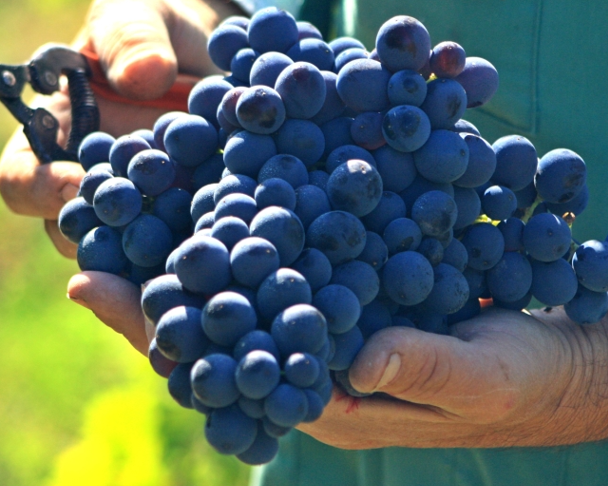
If you work in wine, you've probably been asked some version of this question: "Is there anything serious coming out of Greece besides Assyrtiko?"
The answer is yes. And it's been there all along.
Xinomavro (pronounced ksee-NO-mah-vro) is Greece's great red grape - a variety of genuine world-class pedigree that remains largely unknown outside specialist circles. For importers, sommeliers, and independent retailers who get in early, that obscurity is an opportunity.
What is Xinomavro?
The name translates literally as "acid black" - a clue to its character. Xinomavro is a high-acid, high-tannin red grape grown primarily in the mountainous regions of northern Greece, particularly Macedonia. Its spiritual home is Naoussa, a PDO region in the Imathia regional unit, where the grape has been cultivated for centuries on the slopes of Mount Vermio.
Think of it as Greece's answer to Nebbiolo. The comparison isn't lazy shorthand - it's structurally accurate. Like Barolo's famous grape, Xinomavro produces wines with firm, grippy tannins, elevated acidity, and an aromatic profile that shifts away from primary fruit toward more complex, savoury territory as it ages. Dried tomato, olive tapenade, spice, leather, and red roses are all characteristic notes.
It is not an easy grape. It is not approachable young. But in the right hands, it produces wines of real depth and longevity.
Where does it grow?
Xinomavro's heartland is Naoussa PDO, where single-varietal wines are the rule. This is where you find the benchmark producers - structured, serious wines that reward cellaring.
Amyndeon PDO, further north and at higher altitude, produces a lighter, more perfumed expression of the grape. The cooler climate and sandy soils create wines with more finesse and earlier accessibility. Amyndeon is also one of Greece's few regions producing serious rosé from Xinomavro - pale, dry, and savoury in a style closer to Provence than anything else in the Mediterranean.
Beyond these two PDOs, Xinomavro appears in blends across Macedonia and Thessaly, often adding structure and backbone to more approachable varieties.
Why has it been hiding?
Several reasons - and none of them are about quality.
Greek wine marketing has defaulted to white. Assyrtiko's rise was a genuine success story, but it cast a long shadow. Export focus, critical attention, and trade education all followed the white wine narrative. Xinomavro got left in the background.
It's a difficult sell without context. Walk someone through an unoaked Xinomavro from a young vintage without introduction and they may find it austere, tannic, and confusing. It needs a story - and that story needs to be told by people who understand it.
Production is small and fragmented. Naoussa is not a large region. The best producers are boutique operations with limited export allocation. Volume-driven distribution models haven't prioritised it.
The ageing curve works against impulse purchasing. Xinomavro at its best is not a drink-now wine. The trade infrastructure around aged and cellar-worthy wines from lesser-known regions is underdeveloped in Australia.
Why now?
The timing is right for several reasons.
Sommelier culture in Australia has matured considerably. There is genuine appetite among hospo buyers for wines that tell a story, carry regional identity, and offer something guests haven't already seen on every other list. Xinomavro ticks all three boxes.
The Nebbiolo parallel is a useful commercial lever. Barolo and Barbaresco have never been more popular in Australian fine dining. A sommelier who loves Nebbiolo and hasn't explored Xinomavro is a conversation waiting to happen - and the price differential makes it an easier recommendation.
The independent retail channel is similarly primed. Bottle shop owners who have built their identity around discovery and curation are actively seeking the next credible category. Greek red wine, led by Xinomavro, is a compelling proposition with genuine depth behind it.
How to sell it
Lead with the Nebbiolo comparison, then subvert it. Xinomavro shares the structural DNA but has its own distinct personality. It doesn't taste like Nebbiolo - it reminds you of what you love about Nebbiolo while being something entirely its own.
Match it to food. Braised lamb, slow-cooked beef, hard aged cheeses, dishes built around umami and acidity. The wine's savouriness and acidity make it one of the most food-friendly reds in the world at its price point.
Offer an entry-level and a prestige tier. An approachable, younger-vintage Naoussa sits comfortably in the $30–45 retail range. A reserve or single-vineyard expression from a serious producer makes a compelling case at $60–80+. Give buyers a way in, then give them somewhere to go.
Invest in staff education. Xinomavro sells when the person behind the counter or the floor can explain it with confidence. A one-page producer brief goes a long way.
The bottom line
Xinomavro is not a hidden gem in the patronising sense - it is not a rough diamond waiting to be polished. It is a fully formed, historically significant, critically respected grape variety that has simply not received the export attention it deserves.
That is changing. The question for buyers and retailers is whether they want to be early to the conversation, or late.
Flox Wines and Spirits is one of Australia's leading importers of Greek wine and spirits. For trade enquiries, current stock, and producer notes, contact our team.