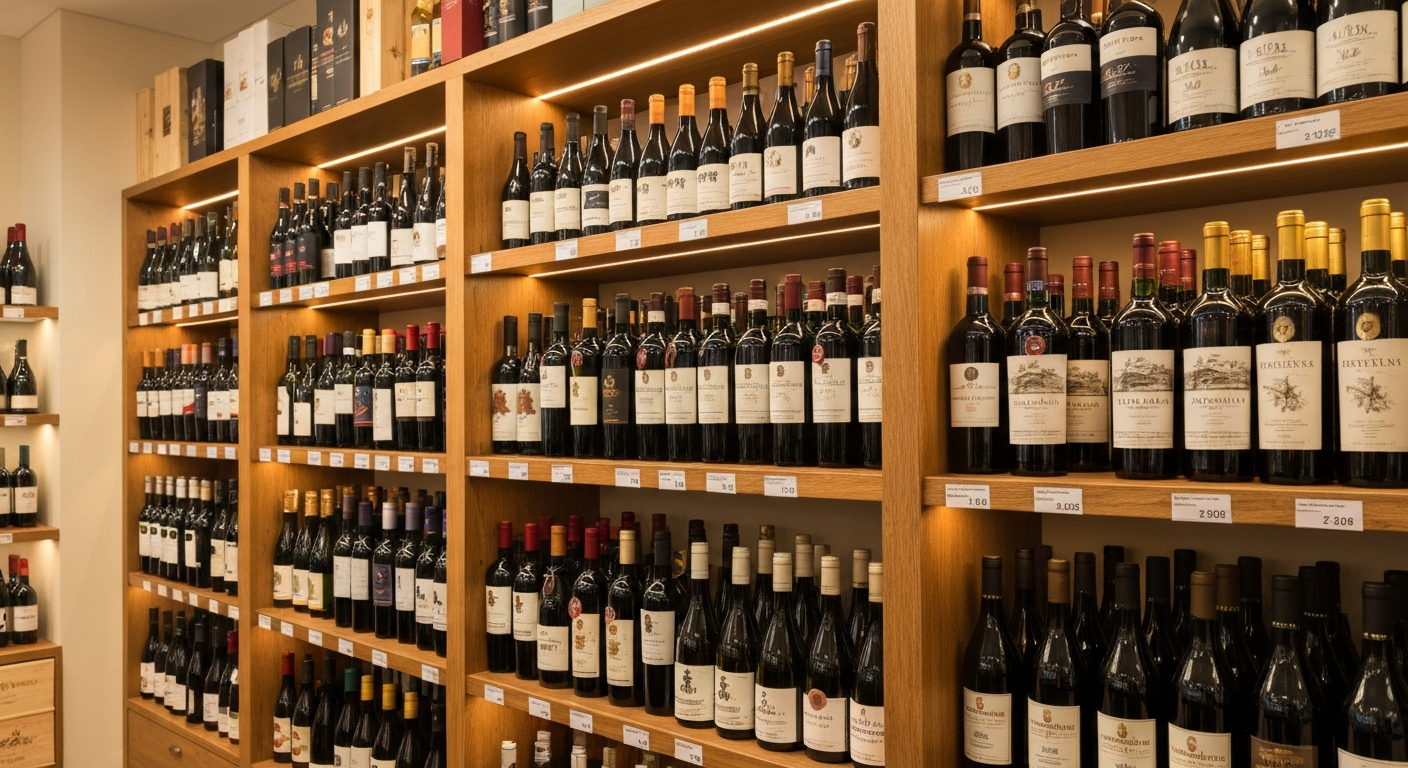
Why independent bottle shops are winning with Mediterranean wine...
There's a shift happening on the shelves of Australia's best independent bottle shops. Alongside the familiar Burgundy and Barossa staples, a new category is quietly building momentum - and the retailers who moved early are reaping the rewards.
Mediterranean wine. Greek, Italian, Croatian, Lebanese, Turkish. Producers with centuries of history, varieties most customers have never heard of, and price points that make the margin conversation very easy.
The chains can't do this. Independents can. And increasingly, they are.
The independent advantage
The major liquor chains - your Dan Murphy's, your BWS - operate on a model built around volume, familiarity, and national ranging decisions made in a head office. That model works for what it is. But it has a structural blind spot: it cannot move fast on unfamiliar categories, it cannot tell complex stories at shelf level, and it cannot build the kind of curated identity that brings a customer back because they trust your taste.
Independent bottle shops have all three of those capabilities. And Mediterranean wine is precisely the kind of category that rewards them.
A customer walking into an independent looking for something interesting is not served by another New Zealand Sauvignon Blanc. They are served by a Santorini Assyrtiko with a volcanic origin story, or a Naoussa Xinomavro that drinks like a leaner, more savoury Barolo. The independent retailer who can explain that - briefly, confidently, with genuine enthusiasm - has just created a loyal customer.
Why Mediterranean wine specifically?
Not all unfamiliar wine categories are equal. Some are obscure for good reasons. Mediterranean wine is obscure for bad ones - the result of historical export focus on bulk wine and a marketing infrastructure that lagged well behind quality.
That quality gap has closed. Dramatically.
The last two decades have seen genuine transformation across Greek, Italian, Croatian, and Lebanese wine regions. Investment in modern winemaking, a return to indigenous varieties, focus on terroir expression, and a generation of winemakers trained in both local tradition and international technique. The wines coming out of northern Greece, coastal Croatia, the Bekaa Valley, and the hillside estates of southern Italy are, in many cases, among the most interesting being produced anywhere in the world.
They are also still priced as if nobody knows about them. That window will not stay open indefinitely.
What the range looks like in practice
A well-constructed Mediterranean wine range for an independent doesn't need to be large. It needs to be coherent, well-supported with producer information, and deep enough in a few key categories to reward the curious customer.
Greece is the anchor. Assyrtiko from Santorini is the entry point - it has critical recognition, a compelling story, and a taste profile (dry, mineral, high acid) that resonates with the same customer who drinks Chablis or Albarino. Behind it, Xinomavro from Naoussa gives you a serious red with a genuine narrative. Add a Moschofilero for aromatic white, and you have a range that covers the bases without overwhelming the shelf.
Italy's lesser-known south and northeast extend the range without adding complexity. Verdicchio, Pecorino, Nerello Mascalese, Primitivo - varieties that are genuinely distinct from the mainstream Pinot Grigio and Chianti conversation, and which carry strong food pairing credentials.
Croatia is the next frontier. Plavac Mali from the Dalmatian coast - a relative of Zinfandel - is a structured, sun-drenched red that over-delivers at its price point. Pošip offers a crisp, textural white from the islands. Both are almost entirely absent from chain retail.
Lebanon adds depth and differentiation. Château Kefraya and Domaine Wardy represent a wine culture of genuine antiquity producing serious, age-worthy reds from the Bekaa Valley. For the right customer - and there are more of them than most retailers expect - these are extraordinary wines with an extraordinary story.
The margin reality
Mediterranean wine is not just a good story. It is a good business.
Because these wines are still building their Australian audience, wholesale pricing reflects that reality. Margin structures are generally more favourable than equivalent quality tiers from Burgundy, Napa, or premium Australian regions. The customer who pays $45 for a bottle of Naoussa Xinomavro is getting a wine that competes qualitatively with bottles at twice the price from more established regions - and the retailer selling it is doing considerably better than they would on a $45 Yarra Valley Pinot.
As category awareness builds and critical attention increases, those price points will move. Retailers who establish these ranges now are building the customer relationships and buying terms that will serve them well as demand grows.
Making it work on the floor
The single biggest driver of success with Mediterranean wine at independent retail is staff confidence. A wine that requires explanation will not sell itself off the shelf - but it will absolutely sell when someone behind the counter can spend ninety seconds bringing it to life.
That means investing in education. Producer one-pagers. Tasting notes written for a retail context, not a wine show. Staff tastings. The importer relationship matters here - a good Mediterranean wine importer should be providing all of this, and should be accessible when questions come up.
Shelf placement and signage matter too. A small producer card with three lines of context - grape variety, region, what it tastes like and what to eat with it - converts browsers into buyers. The customer who was going to pick up something familiar will take a chance on something unknown if someone has taken the time to make it feel approachable.
The customer who buys Mediterranean wine
It is worth being specific about who this customer is, because they are worth understanding.
They are curious. They have moved past the phase of buying by brand recognition and are actively looking for new experiences. They cook, they travel, or they aspire to both. They respond to authenticity and provenance. They are not necessarily wealthy - Mediterranean wine's price accessibility means this is not a prestige category - but they spend thoughtfully and they come back when they find something they love.
They are also, increasingly, first and second generation Australian with Mediterranean heritage. Greek, Italian, Croatian, Lebanese communities in Melbourne, Sydney, and beyond. A bottle shop that stocks their family's wine culture is not just a retailer - it is a destination.
The bottom line
The independents winning with Mediterranean wine ranges are not doing anything complicated. They are stocking quality producers, telling the stories clearly, training their staff, and trusting that curious customers respond to genuine curation.
The chains will catch up eventually. They always do. But by then, the independents who moved early will have the customer relationships, the supplier terms, and the reputation that comes from being first.
That advantage is available right now. The question is who takes it.
Flox Wines and Spirits supplies Mediterranean wine and spirits to independent retailers across Australia. For current ranging options, trade pricing, and staff education support, contact our team.